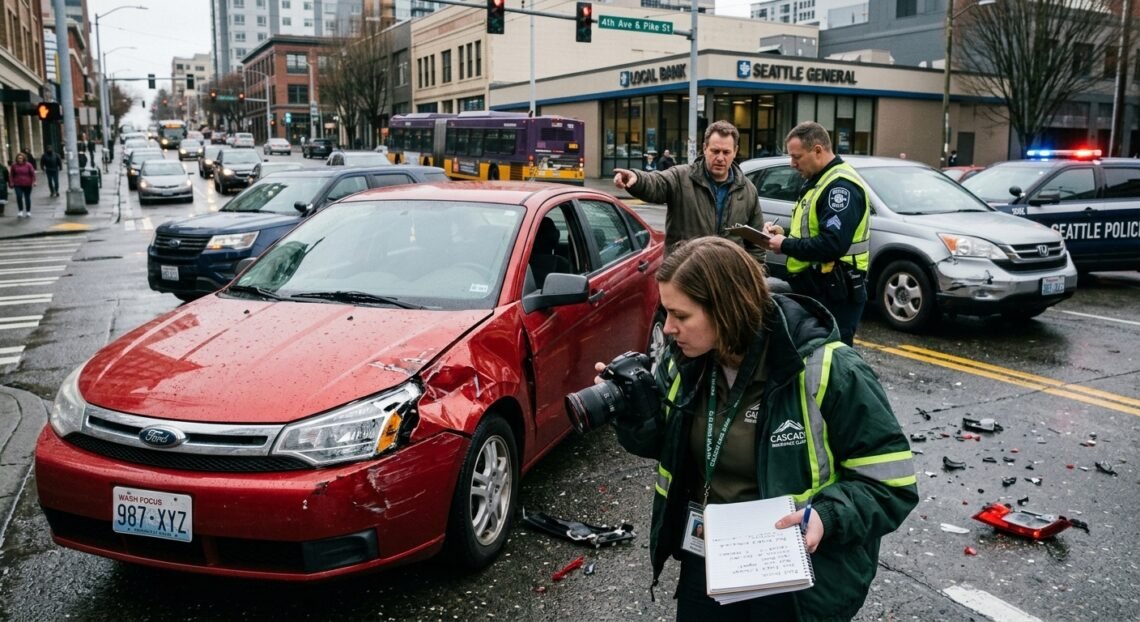
Beyond the Fender Bender: A Real-World Guide to Auto Insurance and Claims
Few moments jump-start your adrenaline quite like the crunch of metal in a parking lot or on a rainy evening commute. In those first tense seconds, your brain races from “Is everyone okay?” to “How much is this going to cost me?”
Auto insurance is one of those expenses we pay month after month, hoping to never actually use. But when you do need it, navigating coverage types, fault determinations, and claims adjusters can feel like stepping into a labyrinth designed to protect the insurer’s bottom line rather than your sanity.
Unpacking What You’re Actually Paying For
When you open your policy declaration page, you are looking at a bundle of distinct coverage types. Understanding how they work together before an accident happens is the best defense against unexpected bills.
- Liability Coverage: This covers the other party’s body and vehicle if you cause an accident. Almost every state mandates minimum liability limits, but standard minimums rarely cover the cost of modern vehicle repairs or medical care.
- Collision Coverage: Pays to fix or replace your vehicle after an impact with another car, a guardrail, or a tree, regardless of who caused the accident.
- Comprehensive Coverage: Protects against “acts of god” and non-collision events—think hail damage, falling tree limbs, hitting a deer, glass breakage, or vandalism.
- Uninsured/Underinsured Motorist (UM/UIM): Steers you clear of financial ruin if someone hits you without enough (or any) insurance coverage.
Choosing the Right Balance: Deductibles vs. Premiums
The structure of your auto policy hinges on a simple trade-off: out-of-pocket risk versus fixed monthly costs.
Total Accident Risk = Policy Deductible + Uncovered Expenses (e.g., Rental Car Gap)
Lowering your deductible drops your immediate out-of-pocket expense during a claim, but raises your recurring premium. Conversely, selecting a higher deductible reduces your monthly bill, but requires an emergency fund ready to absorb that cost on short notice.
| Policy Choice | Monthly Premium | Upfront Out-of-Pocket Cost at Claim | Best Suited For… |
| High Deductible ($1,000+) | Lower | Higher | Drivers with a solid emergency fund who rarely drive |
| Low Deductible ($250 – $500) | Higher | Lower | Daily commuters facing heavy traffic and higher collision risks |
| Liability-Only | Lowest | 100% of your own repair costs | Older, low-value vehicles where repair costs exceed market value |
Step-by-Step: What to Do immediately at the Scene
When an accident happens, staying calm and following a systematic process protects both your safety and your insurance claim later on:
- Check for Injuries and Ensure Safety: Move vehicles out of active traffic if possible and turn on hazard lights. Call emergency services immediately if anyone is hurt.
- Call the Police for an Official Report: Even for minor collisions, an impartial police report provides crucial documentation that prevents “he said, she said” disputes with adjusters later.
- Document Everything Thoroughly: Take wide shots of the entire scene, close-ups of vehicle damage, street signs, weather conditions, and skid marks. Exchange names, phone numbers, policy numbers, and license plates.
- Notify Your Insurer Promptly: Report the incident as soon as you are safe. Sticking strictly to the facts—without admitting fault or speculating—keeps the process accurate and fair.
Navigating the Claims Process and Getting Paid Fairly
Once your claim is open, an insurance adjuster will review the police report, photo evidence, and shop estimates. Their job is to assign fault percentage and calculate the Actual Cash Value (ACV) of the repairs or loss.
If your car is declared a total loss, the insurer pays what the vehicle was worth a second before the crash—minus your deductible. Do not feel obligated to accept their first valuation automatically. Look up local market listings for vehicles of the exact same year, trim, mileage, and condition to ensure their offer reflects real-world replacement costs in your area.
For repairs, you generally have the right to choose your own repair shop rather than being forced to use the insurance company’s preferred network. Choosing an independent, reputable body shop ensures your car is repaired with quality parts rather than cheaper aftermarket alternatives.