Driving by the Data: The Real-World Shift to Telematics and Usage-Based Insurance
For decades, auto insurance pricing relied on broad, blunt categories. Insurers looked at your age, your credit score, your ZIP code, and the make of your vehicle, lumped you in with millions of other drivers, and handed you a bill. If you were a cautious driver living in an area with a high rate of accidents, you effectively subsidized the risky habits of everyone else on your block.
Telematics and Usage-Based Insurance (UBI) have turned that traditional model on its head. By tracking how, when, and how much you actually drive, insurers are shifting from statistical guesswork to real-time personal data. But while the promise of lower premiums sounds enticing, it comes with a trade-off that every driver needs to weigh carefully.
How Telematics Actually Monitors Your Drive
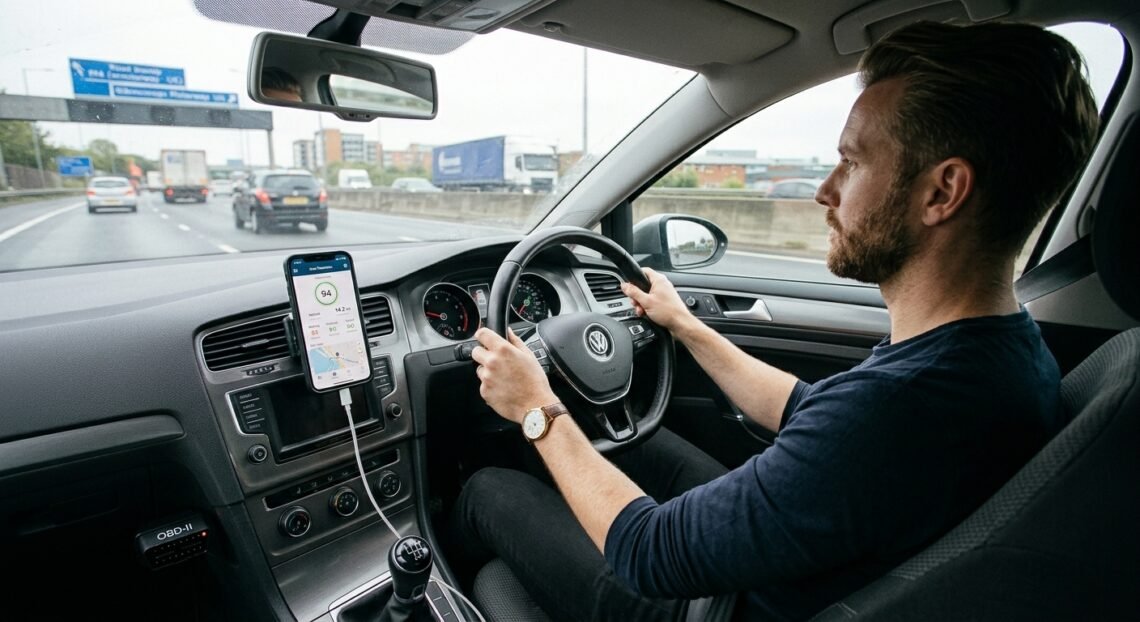
Telematics technology relies on tiny sensors to capture your driving behavior in real time. Depending on the insurance company, data is collected through a small plug-in device (an OBD-II port dongle), a mobile app running on your smartphone, or directly through your car’s built-in connected drive system.
Rather than just counting miles, these systems evaluate a specific set of core metrics:
- Hard Braking & Rapid Acceleration: Frequent sudden stops or aggressive speed surges signal a higher statistical likelihood of rear-end collisions.
- Time of Day: Driving during peak traffic hours or late at night (typically between 12 AM and 4 AM) carries significantly higher accident risks than quiet weekend mornings.
- Cornering Speed: Taking sharp turns at high speeds indicates aggressive handling.
- Distracted Driving: Mobile app-based trackers can detect when you unlock or interact with your phone while the vehicle is in motion.
Individual Premium = Baseline Vehicle Risk × Total Mileage × (Driving Score Multiplier)
If your driving score remains consistently high, the multiplier drops, unlocking discounts that can reach up to 30% or 40% off standard rates.
The Two Main Types of Usage-Based Programs
Not all telematics policies work the same way. Insurers generally divide usage-based models into two distinct categories based on what they measure:
| Program Type | Primary Focus | How It Calculates Cost | Ideal For… |
| Pay-Per-Mile (PHYD – Pay How You Drive) | Total distance driven | Flat base monthly rate + fixed cost per mile driven | Remote workers, retirees, low-mileage drivers |
| Behavior-Based (PAYD – Pay As You Drive) | Driving style and safety metrics | Standard baseline premium adjusted by safety score | Cautious drivers who commute during safe hours |
For someone who works from home and logs under 5,000 miles a year, a pay-per-mile program can immediately slash auto insurance costs in half compared to a traditional annual policy.
The Hidden Fine Print: Privacy and Surcharges
While saving money is the headline selling point, telematics isn’t without its downsides. Before enrolling, it helps to read the fine print regarding privacy and rate increases.
1. Rates Can Go Up, Not Just Down
In the early days of telematics, most programs promised that signing up could only help your rate—if you drove poorly, you simply lost the discount. Today, many major insurers use telematics data to actively increase rates on drivers who exhibit risky habits like frequent night driving, heavy braking, or excessive speeding.
2. Continuous Data Tracking
Allowing an app or device to track your precise GPS locations, acceleration forces, and daily travel routes raises valid privacy concerns. While insurers claim data is strictly used for underwriting and claims processing, third-party data collection and security vulnerabilities remain a ongoing topic of debate.
Is Telematics Right for Your Daily Commute?
Deciding to opt into a usage-based insurance program comes down to your personal routine and comfort with data tracking.
- It is usually worth it if: You drive under 8,000 miles per year, work flexible hours outside of late-night shifts, rarely use your phone while driving, and maintain smooth braking habits.
- You might want to skip it if: You regularly commute late at night, live in a dense city with aggressive stop-and-go traffic (where hard braking is unavoidable), or value absolute privacy over potential savings.
As connected vehicles become standard and telematics algorithms get sharper, personalized pricing is rapidly becoming the norm. Taking the time to understand how your driving habits are scored gives you the power to choose the right policy—and keep your monthly insurance costs under control.